
Engineering for patient care: UQ students take on a Stryker challenge
Inside Stryker’s R&D Lab, UQ engineering students had two hours to turn a complex manufacturing problem into a creative, feasible and clearly communicated concept.
When a medical device is designed for an individual patient, how do you ensure each part remains correctly identified throughout manufacturing?
Patient-specific devices can include custom surgical tools and implants based on a person’s anatomy, with clear and accurate records maintained throughout the manufacturing process.
That need for traceability formed the basis of a real-world challenge at Stryker’s R&D Lab in Herston.
Organised by EAIT Employability in collaboration with Stryker, the Future Work Immersion brought together 33 students from electrical, biomedical, mechanical and mechatronic engineering programs.

Before taking on the challenge, students toured the lab and heard about career pathways across the medical technology sector. They also gained insight into how engineering knowledge contributes to the development and manufacture of patient-specific devices.
Then, with two hours on the clock, the teams set to work.
Their task was to develop a more automated approach to identifying and tracking patient-specific parts through different stages of production. The proposed solutions needed to improve visibility while reducing the risk of errors and reliance on manual tracking.
Stryker facilitators supported each team as students examined the problem, generated ideas and tested their thinking against the realities of a manufacturing environment.
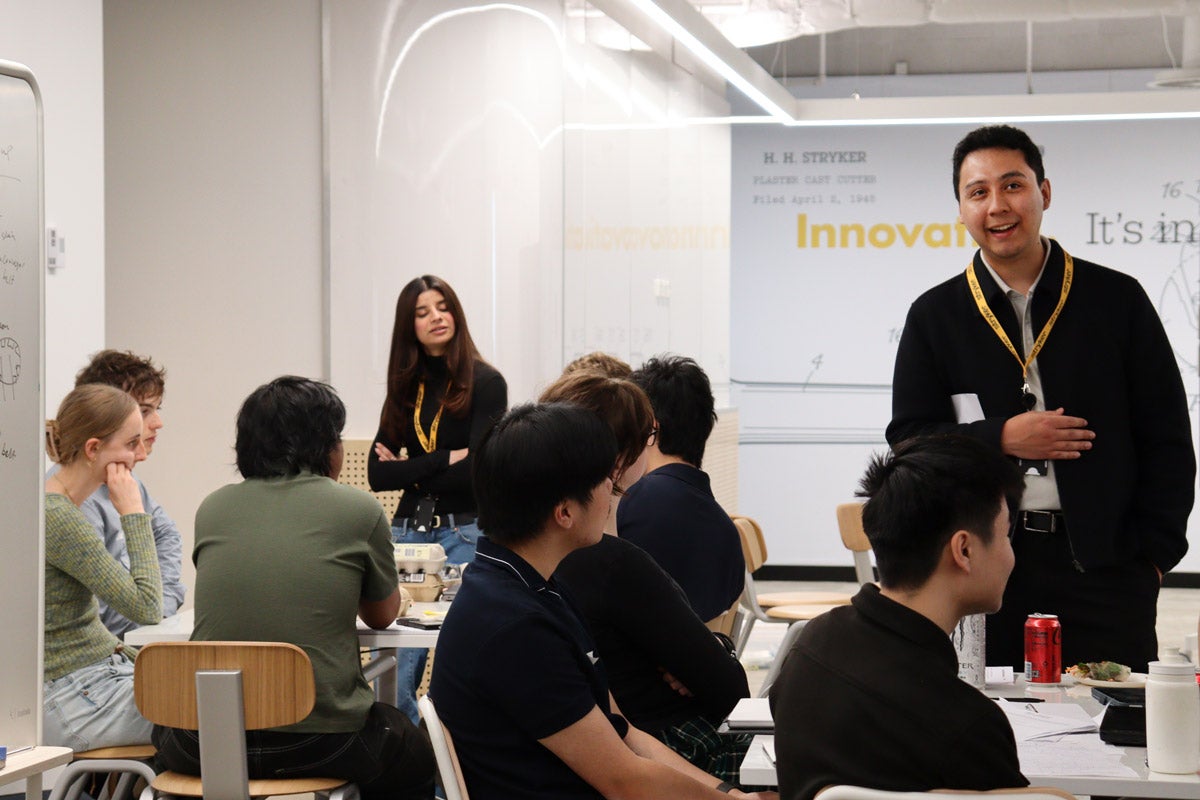
The teams were not expected to build complete working systems. Instead, they developed a clear concept and communicated how it could work in practice. A judging panel assessed each concept against five criteria: creativity; feasibility; potential impact on lead time, quality and reliability; level of automation; and clarity of communication.
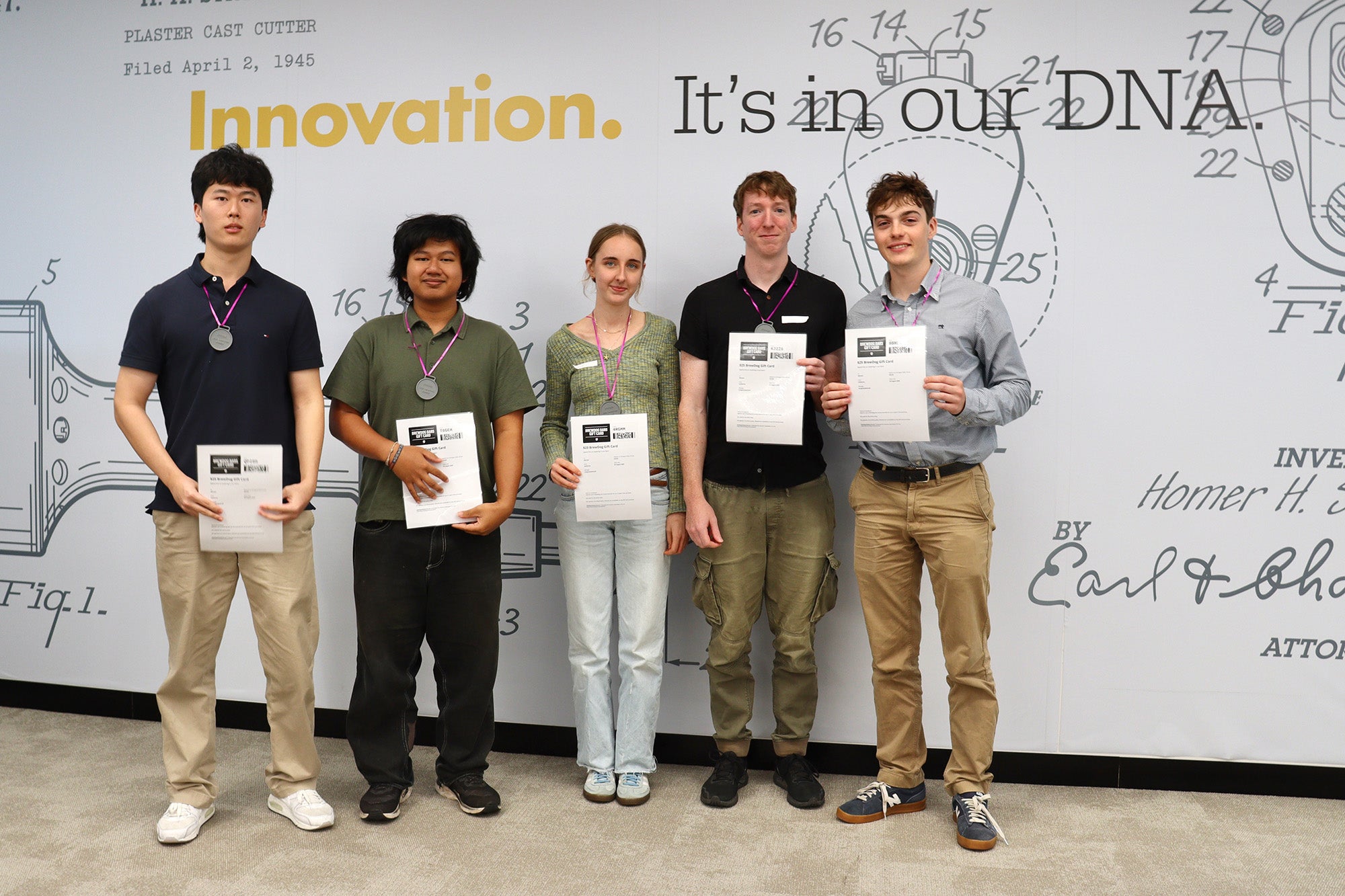
When it was time to pitch, students used sketches, diagrams, mock-ups, demonstrations and props to show how their ideas could work. Congratulations to the winning team, whose interactive approach and creative use of props made their concept easy to follow.
The impact reached beyond the challenge itself. For some students, experiencing Stryker’s R&D environment and engaging with its staff affirmed that medical engineering was the career path they wanted to pursue.
Thank you to the Stryker team for opening the R&D Lab to our students and generously sharing their time, workplace and expertise. The experience showed how technical knowledge, practical problem-solving and clear communication come together when engineers tackle challenges that can ultimately contribute to patient care.
Could your organisation set the next challenge?
Future Work Immersions bring students and industry together through real workplaces and real-world problems. They give participating organisations an opportunity to share their work, showcase career pathways and see how students approach an industry challenge.
Interested in hosting a Future Work Immersion? Contact the EAIT Employability team to find out more.